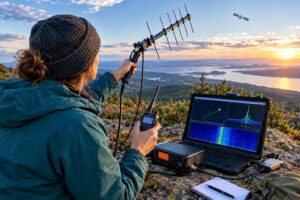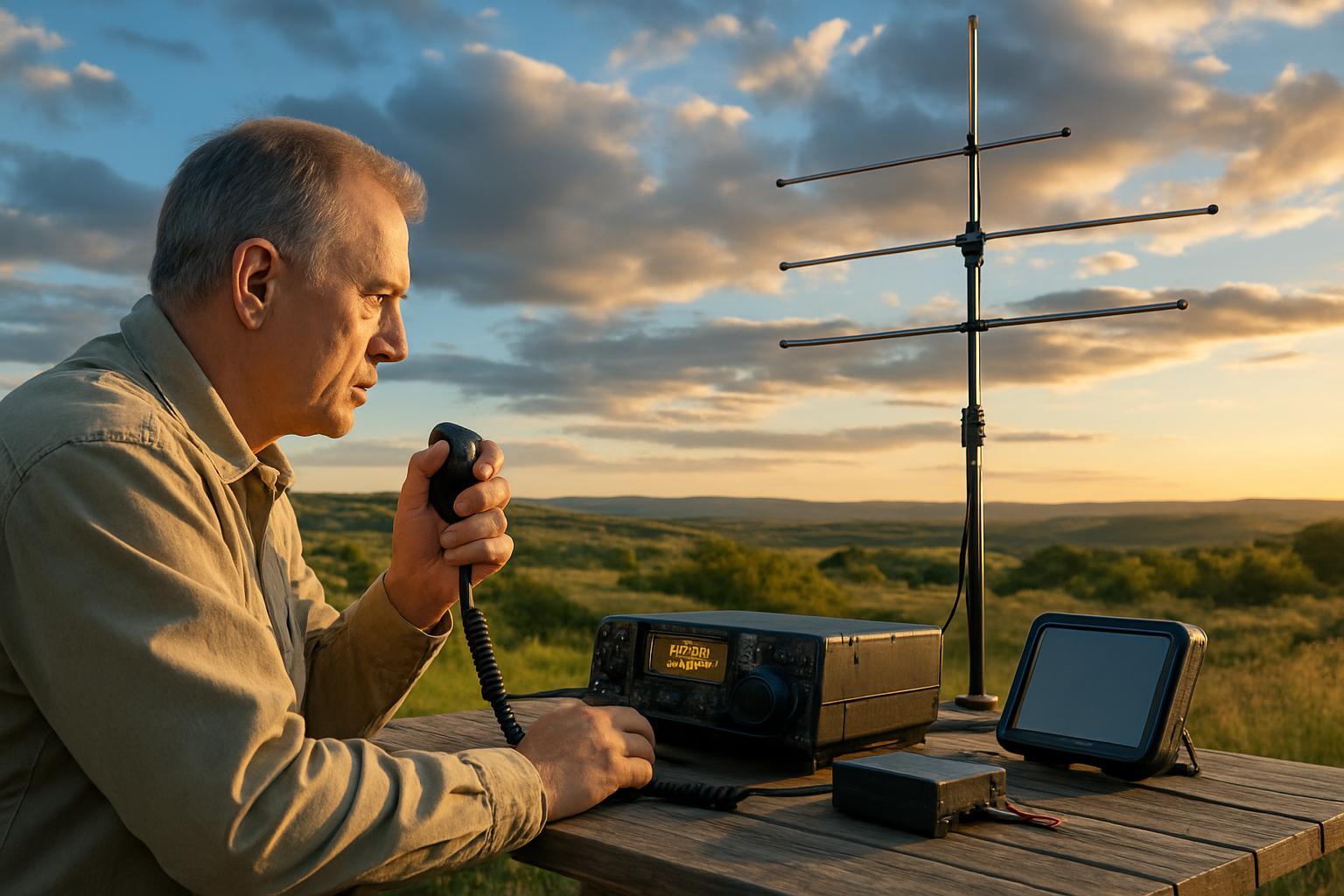
Space weather shapes how radio signals travel through the ionosphere. During 2026, official forecasts from NASA and NOAA describe activity windows that can influence HF and VHF propagation. This article provides practical, noncommercial guidance for planning 10 meters and 6 meters operations around these space weather patterns, with actionable steps and checks you can apply in the coming season.
Understanding Space Weather Forecasts for 2026
Space weather forecasts summarize how solar activity—sunspot emergence, solar radiation, and geomagnetic disturbances—affects the ionosphere. In Solar Cycle 25, forecasting efforts aim to identify periods when the ionosphere is more or less conducive to long-distance communication on various bands. The forecasts produced by NASA and NOAA emphasize that 2026 may include notable activity windows, interleaved with quieter intervals. Operators should interpret these forecasts as planning inputs rather than guarantees; atmospheric conditions, local time, season, and solar wind interactions all shape the actual results on the airwaves.
Key concepts to understand include the general link between solar activity indices (such as solar flux and sunspot numbers) and the ionospheric F2 layer that governs high-frequency propagation. When solar activity trends higher, the F layer can reach higher maximum usable frequencies (MUFs), expanding the potential range for 10m and, under favorable geomagnetic conditions, supporting longer paths on 6m. Forecasts also consider geomagnetic indices that reflect how disturbances from coronal mass ejections and solar wind streams impact propagation, particularly for longer-path 10m contacts and sporadic-E activity on 6m.
For 2026–2027, expect the official cycle-progress reports to outline windows where conditions are more favorable for amateur radio activity on HF and VHF. Use these documents as a guide to align your operating plans with the anticipated ionospheric state, while remaining adaptable to day-to-day variability. See credible forecasts from NASA and NOAA for ongoing updates:
NASA Solar Cycle Progression and Forecast and NOAA Space Weather Solar Cycle Progression.
Propagation Windows on 10 Meters and 6 Meters in 2026–2027
The 10-meter band (28–29.7 MHz) often benefits from heightened solar activity, as the F2-layer ionization can extend the MUF high enough for long-distance contacts during peak windows. For operators, these periods are best planned with a flexible schedule, a ready log, and antennas that can cover a broad range of frequencies quickly. On 10 meters, you may find favorable paths during daylight hours and seasons where solar flux indices trend higher, but variability remains a constant factor.
The 6-meter band (50–54 MHz) behaves differently. While it can open for long-range daylight DX during favorable conditions, it frequently relies on more localized mechanisms such as sporadic-E (Es), meteor scatter, and occasional auroral propagation during geomagnetic activity. Es events tend to occur in bursts and can produce short, bright openings that enable short-to-mid distance contacts with relatively modest antennas. Meteor scatter on 6m is a timed-play phenomenon tied to meteor activity and local-time geometry, while auroral 6m openings can accompany geomagnetic disturbances and offer opportunistic paths at high latitudes.
Because space weather windows are not uniform, the prudent planner treats 10m and 6m as complementary tools. A 10m contact plan anchored in a broad, year-round monitoring mindset can capture longer-range opportunities across higher solar activity periods, while a well-prepared 6m strategy emphasizes Es-season timing, portable Es-capable antennas, and awareness of auroral and meteor-scatter chances. The practical takeaway is to schedule flexible operating blocks, keep equipment ready across both bands, and use forecasted windows to coordinate alerts with fellow operators.
Planning Your Operations for the 2026–2027 Windows
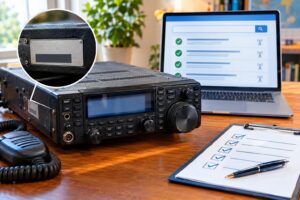
Effective planning for space-weather-influenced bands rests on three pillars: awareness of the forecast windows, station readiness, and a flexible operating plan that can adapt to changing conditions. Start with a forecasting calendar that highlights the anticipated periods of higher ionospheric activity. Pair this with a week-by-week readiness checklist for your station so you’re prepared to switch bands or modes when a window opens.
Step-by-step planning tips:
- Forecast alignment: Regularly review NASA/NOAA cycle-progression updates and mark on your calendar the windows likely to influence 10m and 6m propagation. Treat these as opt-in periods for intensified activity rather than guaranteed DX wins.
- Antenna readiness: Ensure you have efficient, multi-band or easily tunable antennas for 10m and 6m, with SWR checks and clean feedlines. Verify that tuners, coax, and ground systems are in good condition before the expected windows.
- Logging and alerts: Have a logging plan ready and consider short alert routines (watch-list calls, skeds with known partners, and propagation-friendly spots) to maximize opportunities during fleeting openings.
- Mode selection: Prepare to switch between CW, SSB, and digital modes as conditions dictate. Digital modes may prove more reliable during marginal openings, while CW can maximize information transfer under weaker signals.
- Power management: Balance transmitter power with antenna efficiency. When bands open only briefly, a modest power level with an efficient antenna is often more effective than pushing high power into a marginal path.
- Safety and regulations: Respect licensing privileges and RF exposure rules for your region. Space-weather planning does not override local regulations, and field operations should always consider electrical safety and weather hazards.
By anchoring a plan to forecast windows and keeping your station ready, you increase the likelihood of making meaningful contacts on 10m and 6m without requiring extraordinary conditions. Record your results and compare them with forecasts to refine future planning cycles.
Monitoring, Tools, and How to Use Forecasts
Reliable space weather planning depends on accessible data and a workflow for translating forecasts into action. Start with the official forecast products and then bring in practical, operator-focused indicators. While numbers and charts evolve, the core idea remains: anticipate when the ionosphere is likely to support your target bands and be prepared to adjust rapidly as conditions change.
Key monitoring practices:
- Track solar indices: Keep an eye on solar indices and the general trend of solar activity to gauge when higher frequency bands might become useful. Use forecast summaries from NASA and NOAA as your baseline reference.
- Watch the ionospheric state: Although full real-time ionosonde data is not always available to the hobbyist, note changes in skip distances, path reliability, and observed openings on your preferred bands. Local beacon networks and sked partners can help corroborate conditions.
- Plan for variability: Even within a forecast window, day-to-day variability can be significant. Build flexibility into your operating schedule so you can take advantage of brief openings without sacrificing other aspects of your station.
- Use credible sources: Rely on official forecast products as your anchor. For ongoing updates, refer to the NASA and NOAA cycle-progression pages linked earlier.
In practice, 10m planning benefits from aligning outdoor activities with daylight weekdays during periods of elevated activity, while 6m Es opportunities tend to cluster in certain seasonal patterns. The combination of both bands can provide a balanced approach to 2026–2027 activity cycles, allowing you to maximize contacts while learning the seasonal behavior of space-weather-driven propagation.
Operational Scenarios and Best Practices
When space weather windows align with your operating goals, certain tactics tend to yield reliable results without requiring exotic equipment. Consider these scenarios and practices:
- Strong solar activity window on 10m: Prepare for potential long-path contacts that exploit higher MUFs. Use a well-tuned, efficient 10m antenna array or a multi-band setup that can switch quickly between 10m and adjacent bands as needed.
- Quieter periods, but Es on 6m: Plan Es-oriented operations, test portable setups, and chase nearby stations in common Es regions. A simple 6m antenna and a shift to SSB or CW can yield quick gains during Es bursts.
- Geomagnetic disturbances: Be ready for erratic propagation on 6m and occasional F2-like enhancements on 10m if a delayed response from solar wind streams occurs. Maintain situational awareness and avoid overestimating opening durations.
- Digital modes as a hedge: In marginal or rapidly changing conditions, digital modes can extract usable signals from weak paths where traditional voice may falter. Keep a ledger of successful digital contacts for trend analysis.
Across these scenarios, the underlying principle is to couple forecast awareness with practical readiness. Space-weather-based planning is about increasing reliability and efficiency, not guaranteeing specific outcomes. The more consistently you apply a forecast-informed approach, the more predictable your 10m and 6m activity becomes over the 2026–2027 horizon.
Safety, Regulations, and Practical Considerations
Forecast-informed planning does not override safety or regulatory requirements. RF exposure limits, licensing privileges, and local rules vary by jurisdiction, and these must be observed in all field and station operations. When operating outdoors or in portable setups, practice electrical safety, lightning awareness, and proper battery management for field work. Use reliable grounding, proper insulators, and secure mounting for antennas to avoid hazards during weather-sensitive activities.
In addition, remember that space weather forecasts are subject to revision. Treat them as living planning documents and stay informed through official channels for updates as solar activity evolves. The goal is to improve your operating readiness and understanding of propagation dynamics, not to press past your station’s limits or to rely on a single forecast as a deterministic forecast of contact opportunities.
Glossary of Key Terms
- Space weather: Conditions in space driven by solar activity that influence Earth’s near-space environment and radio propagation.
- Ionosphere: A layer of the Earth’s upper atmosphere that is ionized by solar radiation and affects radio wave propagation, especially on HF and VHF bands.
- MUf (Maximum Usable Frequency): The highest frequency that can be used for a given path at a given time, limited by ionospheric conditions.
- F2 layer: The highest, most reflective ionospheric layer important for long-distance HF propagation.
- Es (sporadic-E): Dense, localized pockets of ionization in the E-layer that can enable short-range VHF propagation on 6m and occasionally higher bands.
- Geomagnetic activity: Disturbances in Earth’s magnetic field driven by solar wind, impacting propagation and auroral conditions.
- Solar flux index (SFI): A measure of solar radio emissions that correlates with ionospheric strength and propagation potential.
Further Reading and Resources
Official forecasts and educational resources from NASA and NOAA form the foundation of space-weather-informed planning. For ongoing updates, consult the following credible sources:
In addition, consider subscribing to local or regional amateur radio forums and propagation newsletters that summarize space weather impacts on practical operating conditions. Use these resources to complement the forecast panels and to tailor your seasonal operating plan for 2026–2027.
By integrating space-weather forecasts into your routine planning, you can approach 10m and 6m operation with a disciplined, adaptable strategy that respects the natural variability of the ionosphere while maximizing the likelihood of productive contacts during favorable windows.