Space-Weather Aware HF Planning in 2026
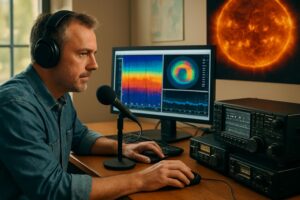
The amateur radio bands above 10 meters are uniquely sensitive to space weather. In 2026, operators can blend VOACAP Online
forecasts with the space weather outlooks published by the Space Weather Prediction Center (SWPC) to identify practical windows
on 10 meters and 6 meters for reliable contacts. The intent of space-weather aware planning is not to predict every QSO, but to
align operating goals with plausible propagation opportunities and to reduce guesswork when bands open or close due to solar activity.
What VOACAP Online Brings to 2026 Planning
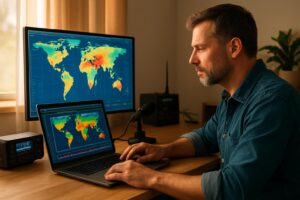
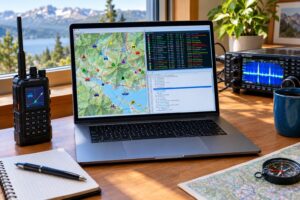
VOACAP Online provides a user-friendly interface to model high-frequency (HF) paths across a global map. It translates solar and ionospheric
conditions into estimates of path reliability, suggested frequencies, and diurnal patterns. For 2026 planning, the key value is
seeing how predicted conditions translate into practical connection opportunities on specific bands, with a focus on the low to mid
HF ranges that are commonly used for long-distance contacts when space weather is favorable.
- Input considerations: predicted solar flux, geomagnetic activity, solar wind conditions, and regional propagation
effects. - Output interpretations: recommended operating bands and times, approximate fade margins, and geographic path
viability. - Decision support: VOACAP outputs help decide when to shift focus from one band to another, or when to
switch from a phone mode to a digital mode that tolerates weaker signals.
When using VOACAP Online, operators should interpret the plots as planning aids rather than guarantees. VOACAP provides a
comparative view of many paths, which is especially useful for day-to-day scheduling, field ops, and informal QRP activity.
For current access and configuration guidance, consult the VOACAP official HF planning resources: VOACAP HF Online overview.
The SWPC Space Weather Outlooks You Can Use
SWPC produces space weather products that influence HF propagation, including indexes that reflect solar activity, geomagnetic
conditions, and solar wind structures. In 2026, these outlooks are especially useful when planning operations around 10 meters
(near 28 MHz) and 6 meters (near 50 MHz). By cross-referencing VOACAP projections with SWPC outlooks, a planned operation can be
aligned with times when the ionosphere is more likely to support longer-range paths and higher-frequency operation.
Practical sources include SWPC reports and products that summarize expected conditions on a weekly or longer horizon. For observers
who want to study documented forecasts, the following resources are relevant:
- Weekly or periodic SWPC outlooks and product summaries (see primary sources listed in the references).
- Detailed forecast PDFs and briefings that describe solar wind parameters and geomagnetic activity as they relate to HF propagation.
Example documents and data from SWPC can be consulted for context and planning, including the radar-like performance notes that often
accompany space weather briefings. A starting point for formal data access is SWPC’s published reports and product PDFs, such as the
2026-11 forecast brief PDF: PRF2673.
A Practical Planning Workflow for 2026
The following workflow helps translate space weather outlooks and VOACAP predictions into actionable operating plans. The goal is
to establish repeatable steps that yield clear decisions rather than vague hopes for propagation success.
-
Set operational goals: define intended contacts, preferred bands, and acceptable signal levels. For example,
decide whether the aim is regional windy-path contacts on 6 meters or longer-range intercontinental QSO attempts on 10 meters. -
Review VOACAP Online forecasts: inspect path reliability and frequency recommendations for your region and
your target DX or local contacts. Note times of day with higher predicted reliability on 10m and 6m and compare against your
local weather and lighting conditions if planning field ops. -
Cross-check SWPC outlooks: examine solar activity and geomagnetic indicators anticipated over the same window. If
SWPC signals elevated activity or geomagnetic disturbance is forecast, plan for possible compass changes in path geometry and
narrower operating margins. -
Map windows to activity: align VOACAP windows with SWPC outlooks to identify times when both tools agree on a
plausible opening. Use VOACAP to explore which bands offer the best trade-off between path reliability and practical
equipment constraints. -
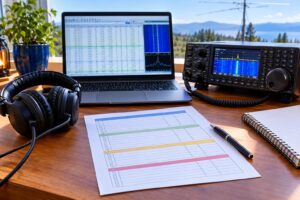
Define a checklist: operational plan, antenna configuration, feed-line considerations, and safety checks, all
tailored to the time window and band of interest.
The workflow emphasizes collaboration between planning tools rather than dependence on a single source. Because 2026 space weather
is dynamic, regular updates to conditions, especially around high solar activity periods, should be part of routine monitoring.
Planning Windows for 10m and 6m in 2026
The 10m and 6m bands are often the most sensitive to space weather changes. On 10 meters, operator-friendly windows typically occur
when there is a favorable F-layer ionization and modest geomagnetic disturbance, producing reliable daytime or early-evening paths.
On 6 meters, small shifts in solar wind speed or the onset of isolated geomagnetic activity can suppress or enhance openings quickly.
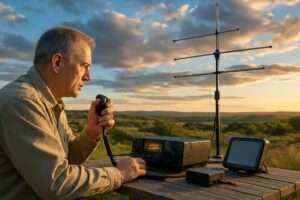
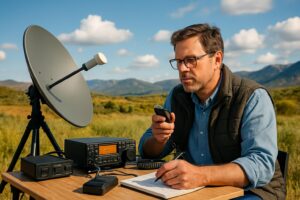
In 2026, the combination of VOACAP’s band-specific guidance and SWPC outlooks can help you decide when to schedule portable
operations, grid-down field days, or club activity sessions around predicted windows rather than purely opportunistic times.
Practical use involves targeting times when VOACAP indicates a viable 10m or 6m path between your location and a few high-interest
regions, then confirming with SWPC’s indicators that the space-weather environment is compatible with those paths for the planned
window. If you’re operating in a busy solar cycle phase, you may see more frequent but shorter openings on 6 meters and periodic
longer windows on 10 meters when the ionosphere is favorably structured.
Worked Scenarios for 10m and 6m Planning
The following scenarios illustrate how space-weather aware planning translates into concrete operational decisions. Note that these
scenarios are generic planning illustrations and do not represent guaranteed outcomes.
Scenario A: Daytime 10m Openings with Moderate Activity
You start with VOACAP Online to check a path from your mid-latitude U.S. location toward Western Europe and the Caribbean. VOACAP
suggests a strong 28 MHz path around mid-day with good reliability to Western Europe and acceptable reliability to the Caribbean.
You then review SWPC outlooks and observe a period of moderate solar activity expected in the same window, with geomagnetic indices
not forecast to spike. The recommended course is to operate SSB on 10m during late morning to early afternoon local time, focusing
on Europe first and the Caribbean as a secondary target if the timeline holds. If a working group or club event is planned, you
can propose a 2–3 hour block that aligns with VOACAP’s peak reliability and the SWPC forecast.
Scenario B: 6m Path Potential with Quick Transitions
For a club event targeting regional 6m contacts, you review VOACAP’s 6m forecasts for your region. VOACAP shows brief but
repeatable openings during the late morning and a second window in the late afternoon. Simultaneously, SWPC indicates a pulse of solar
wind speed increase that may coincide with transient geomagnetic activity—enough to create short, crowded bands with high MUF.
The plan is to monitor actively, switch between CW and SSB as band conditions evolve, and be ready to exploit the first robust window
on 6m while maintaining a fallback on 10m if the 6m window closes early.
Common Pitfalls and Practical Tips
- Over-reliance on a single tool: VOACAP and SWPC provide complementary views. Use them together and verify with on-air
observations rather than assuming a single forecast guarantees a QSO. - Antenna considerations: Ensure antennas and feed lines are optimized for the predicted paths. VOACAP outputs presume
reasonable radiating efficiency; high loss feeds or mismatches can negate predicted reliability. - Time zone and latency: Space weather forecasts can shift as new data arrive. Plan with buffer time to adjust schedules
if conditions change unexpectedly. - Legal and safety caveats: Always comply with licensing, RF exposure rules, and local ordinances. Propagation planning
does not override regulatory constraints.
Safety, Regulatory, and Practical Considerations
Propagation planning is a guide for better operating decisions, not a guarantee of contacts. RF exposure and electrical safety should be
addressed in every operation, especially when portable setups involve elevated antennas, mast work, and outdoor environments.
Regulatory constraints vary by jurisdiction and can change with time. Operators should consult current licensing rules, band plans, and
local requirements before transmitting.
Frequently Asked Questions
Q: How should I use VOACAP Online with SWPC data?
A: Use VOACAP to identify bands and times with higher predicted path reliability, then cross-check with SWPC
outlooks for those same windows. If both align, schedule transmissions during that period and keep a flexible plan for adjustments as
conditions evolve.
Q: Are 10m openings common in 2026?
A: Openings depend on solar activity and geomagnetic conditions. VOACAP provides probabilistic guidance, which is
particularly useful when activity is intermittent but not extreme.
Q: Can I rely on these tools for every QSO?
A: They are planning aids that improve the odds of favorable paths; operators should maintain flexible operating
strategies and be ready for rapid changes on both bands and modes.
Key Takeaways
- In 2026, VOACAP Online and SWPC outlooks provide practical planning alignment for 10m and 6m paths.
- Treat predictions as planning aids and cross-check between tools and on-air observations to refine operating windows.
- Prepare for rapid changes in space weather by maintaining adaptable schedules, equipment readiness, and safety practices.
- Always verify current regulatory requirements and equipment safety before transmitting in field or portable setups.
Further Reading and Resources
For direct access to the tools and related materials used in practical planning, consider the following legitimate sources:
Note: This article presents practical, noncommercial guidance for space-weather aware HF planning. While the included sources are real, readers should consult the primary sites for the most current data and guidance.