Why HADES-L Deserves a Careful First Pass
The HADES-L amateur satellite is exactly the kind of new low Earth orbit opportunity that gets operators excited: fresh reports, fresh orbital data, and the possibility of hearing an amateur payload that was not on your pass list a short time ago. The responsible way to approach any new LEO, however, is not to transmit first and sort out the details later. It is to verify the satellite is active, confirm the current operating mode, understand Doppler behavior, and make sure your license privileges cover the uplink you plan to use.
The research trail for HADES-L is useful but also a reminder that satellite operations are time-sensitive. The IARU satellite frequency coordination page lists HADES-L as coordinated on 2026-10-02, AMSAT reported October Transporter-18 amateur payload activity in its November 2026 news archive, and AMSAT SatDB lists HADES-L as active. Those are good starting points, not a substitute for current pass-by-pass verification. A coordinated frequency plan does not prove the payload is enabled on your next pass, and an active database entry does not mean the transponder is open at all times.
Before transmitting, treat HADES-L as a live shared resource. Listen, decode if possible, verify current status from trusted sources, and operate as if every unnecessary carrier blocks someone else’s one chance at the pass.
Start With Source Verification, Not Software Memory
Satellite tracking programs are only as good as the data and frequency memories you feed them. If you imported HADES-L once, or copied a frequency note from a social post, do not assume it remains correct. Commissioning phases, mode changes, experimental schedules, and naming updates can all affect what you should do on the air.
Use authoritative references first:
- IARU Satellite Frequency Coordination entry for HADES-L
- AMSAT November 2026 news archive
- AMSAT SatDB satellite database
- ARRL Letter, October 15, 2026 issue
Read those sources with the right mindset. The IARU coordination entry helps identify the intended frequency plan. AMSAT news can confirm launch and amateur payload activity. SatDB can help with current status and satellite identification. The ARRL Letter can provide broader amateur-radio context. None of these should be treated as permission to transmit blindly. Your station, your country, your license class, and the satellite’s current status still matter.
Confirm the Uplink Before You Key the Microphone
The title frequency, 29.472 MHz uplink, sits in the 10-meter band. That has two important consequences for US operators. First, it is HF, not VHF or UHF, so your transceiver, antenna system, filtering, and RF exposure assumptions may differ from a typical 2-meter or 70-centimeter satellite setup. Second, US license privileges are not identical across the entire 10-meter band.
In the United States, operators must check current FCC amateur rules and their license class before transmitting. Do not assume that holding a Technician license automatically covers 29.472 MHz. Technician HF privileges are limited compared with General, Advanced, and Amateur Extra privileges, and 29.472 MHz is not in the familiar Technician 28.0 to 28.5 MHz segment. International operators should check their own regulator and band plan.
Also verify the mode. Do not assume the uplink is FM, SSB, data, or a specific signaling format unless a current source says so. A wrong-mode transmission can be just as disruptive as an off-frequency one. If a satellite uses an uplink access tone, data protocol, or scheduled activation window, that information must come from current operational guidance, not from guesswork.
Telemetry First: Hear the Satellite Before You Use It
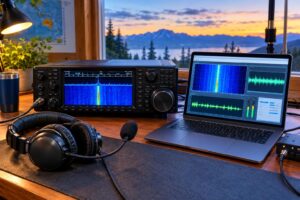
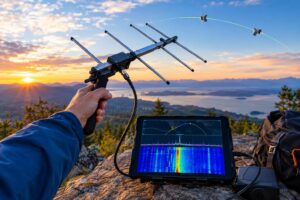
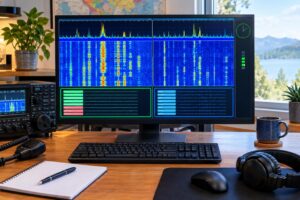
For a new LEO, the best first contact is often no contact at all. Start by receiving. If HADES-L is sending telemetry, a beacon, or any published downlink signal, confirm that you can hear or decode it before attempting an uplink. This tells you several things at once: your tracking data is close, your pass prediction is reasonable, your receive chain works, and the satellite is actually present during that pass.
A practical receive-only check looks like this:
- Update your Keplerian elements or TLE source before the operating session.
- Confirm the satellite name, NORAD catalog number if available, and any alternate object naming in your tracking program.
- Choose a pass with adequate elevation. A higher pass gives more time and a stronger signal margin.
- Record the pass audio or baseband if your setup allows it, so you can review weak telemetry later.
- Note the actual acquisition of signal and loss of signal times compared with prediction.
- Do not transmit if you cannot positively identify the satellite or its active mode.
Telemetry is more than a courtesy. It is your reality check. If the downlink is absent, unstable, or inconsistent with current reports, that is a reason to wait, not to call harder.
Doppler: The Uplink Is Low, but the Pass Is Still Moving
Doppler shift is unavoidable with LEO satellites. The satellite is moving several miles per second relative to your station, so the apparent frequency changes during the pass. On a 29.472 MHz uplink, Doppler is much smaller than it would be on 145 MHz or 435 MHz, but it is not zero. A simplified maximum estimate is:
Doppler shift = frequency × relative velocity ÷ speed of light
Using 29.472 MHz and an illustrative LEO relative velocity of about 7.5 km/s, the maximum possible shift is roughly 737 Hz. In real operation, the shift varies through the pass and depends on geometry. That amount may be small compared with a wide FM channel, but it matters for narrowband or data modes and for disciplined operating. The downlink, if it is on VHF or UHF, may show a much larger Doppler shift and usually deserves more active correction.
Do not rely on a single fixed frequency memory unless the published operating method says that is appropriate. Many satellite operators use computer-assisted Doppler correction through CAT control. Others manually tune the higher-frequency side of the path while keeping the lower-frequency side more stable. The correct strategy depends on the satellite’s mode and published operating convention.
29.472 MHz Uplink Etiquette on a Shared Pass
A LEO pass is short. The usable window may be only a few minutes, and dozens of stations may be hearing the same opportunity. Good uplink etiquette is not about sounding polished; it is about leaving room for the satellite and other operators.
Use these habits before calling HADES-L:
- Listen through the first part of the pass. Confirm the downlink, the activity level, and whether stronger stations are already using the satellite.
- Use the minimum effective power. More power is not better if it overloads the receiver or captures the channel. Increase only if you have a clear reason.
- Keep calls short. Use your call sign, grid square if appropriate, and brief exchanges. Avoid long explanations during a busy pass.
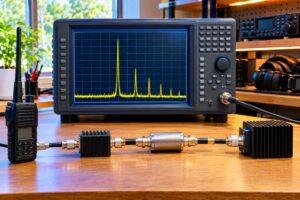
- Do not tune up on the uplink. Test antennas, SWR, audio levels, and CAT control into a dummy load or off-air method before the pass.
- Avoid blind carriers. Repeated unmodulated keying to see if you can hear yourself is poor form and may block valid traffic.
- Respect mode and schedule limitations. If the payload is in telemetry-only, commissioning, or restricted testing, do not attempt contacts.
The 10-meter uplink adds another concern: terrestrial propagation. Depending on band conditions, your signal may travel far beyond your local area even without the satellite. Make sure your transmitted audio, occupied bandwidth, and frequency accuracy are suitable for the band segment and mode.
Station Setup Checks Before the Pass
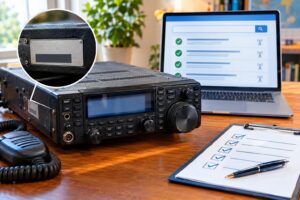
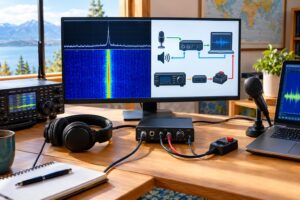
A safe HADES-L attempt begins before the satellite rises. Build a written checklist so you are not making avoidable decisions under time pressure.
Receiver side
- Tracking software updated and time synchronized.
- Correct satellite selected, with current TLE data.
- Downlink frequencies entered from current references.
- Recording enabled if desired.
- Headphones or speaker level set before acquisition of signal.
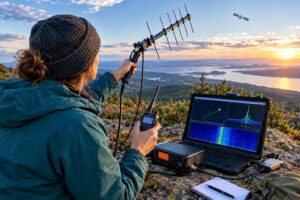
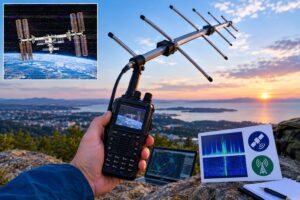
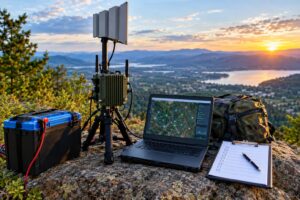
- Rotator, handheld antenna, or fixed antenna plan ready.
Transmitter side
- License privileges confirmed for 29.472 MHz and intended mode.
- Transmit frequency and offset plan verified.
- Power set low initially, with no speech processor or excessive audio drive.
- Microphone gain checked locally before the pass.
- Antenna matched for 10 meters; feed line and connectors inspected.
- RF exposure compliance considered for your antenna location and power.
For a 10-meter uplink, a full-size antenna is physically larger than the compact antennas many operators use for VHF/UHF satellite work. A quarter-wave vertical is roughly 8 feet long before adjustment, and a half-wave dipole is roughly 16 feet tip to tip. Portable operators should secure masts and wires so the desire to catch a pass does not create a trip, fall, or overhead-line hazard.
Worked Example: A Conservative First HADES-L Session
Suppose a US General-class operator wants to evaluate HADES-L from a home station. The station has an HF transceiver capable of 10 meters, a 10-meter antenna with acceptable SWR, and a separate SDR receiver for the expected downlink. The operator has current tracking data and has checked the IARU coordination entry, AMSAT news, and SatDB status.
For the first pass, the operator does not transmit. They record the downlink, watch the Doppler trend, compare actual signal timing with the predicted pass, and confirm whether the received signal matches current reports. If the downlink is not heard, they stop there. No uplink calls are made.
On a later higher-elevation pass, after confirming active operation and mode, the operator prepares a short call. Power is set conservatively. The operator listens first, waits for a clear opening, sends one brief call, and then listens on the downlink rather than repeating continuously. If no return is heard, the operator adjusts within the published Doppler plan and tries again only if the channel is clear. If the pass is crowded, the operator logs reception only and leaves the satellite to others.
That is not a timid approach. It is how experienced satellite operators protect a shared resource.
Common Mistakes to Avoid
- Using old frequency memories. Always compare your radio memories with current published information.
- Assuming active means available. A satellite can be active for telemetry while not open for general QSOs.
- Ignoring license class limits. Technical ability to transmit on 29.472 MHz is not the same as legal authority.
- Overdriving the uplink. Excessive power or audio can reduce usability for everyone.
- Chasing the wrong object. New payloads may have confusing early names in tracking software. Verify identity.
- Letting automation run unchecked. CAT Doppler correction is useful, but wrong settings can move you off frequency quickly.
FAQ
Is IARU coordination the same as permission to transmit?
No. IARU satellite frequency coordination identifies a coordinated frequency plan. Your authority to transmit comes from your license, regulator, operating rules, and the satellite’s current operating status.
Should I call HADES-L if I cannot hear the downlink?
Usually no. If you cannot confirm the satellite is present and active, transmitting increases the risk of interfering with other users or calling into the wrong situation.
Does Doppler matter on a 29.472 MHz uplink?
Yes, but less than on VHF or UHF. The 10-meter uplink Doppler is comparatively small, while a VHF or UHF downlink may require more correction. Follow the current operating guidance for the satellite’s mode.
Can a US Technician-class operator use the 29.472 MHz uplink?
Do not assume so. US Technician HF privileges are limited and do not generally include all of 10 meters. Check the current FCC rules and your license privileges before transmitting.
Key Takeaways
- Verify HADES-L status from trusted sources before transmitting.
- Use telemetry and downlink reception as your first reality check.
- Confirm that 29.472 MHz is legal for your license class and jurisdiction.
- Account for Doppler, especially on any VHF/UHF downlink.
- Use minimum effective power, short calls, and courteous pass management.
- When in doubt, listen and log rather than transmit.
The HADES-L amateur satellite can be a rewarding new LEO target, but the best operators approach it with discipline. Confirm the facts, respect the uplink, and make your first transmission only after the satellite, your station, and your privileges all check out.