What Makes SONATE-2 APRS Useful in 2026?
SONATE-2 APRS gives VHF packet operators another current, non-ISS satellite digipeater to try when the pass geometry, satellite status, and local station setup line up. For hams who already understand ordinary terrestrial APRS, the satellite version is familiar but less forgiving: the pass is short, the RF path is moving fast, and a few unnecessary packets can crowd out everyone else.
The practical goal is simple: transmit a properly formatted 1200-baud APRS packet on the satellite’s published amateur frequency, have SONATE-2 digipeat it, and verify that it was heard either directly in your own receiver or through an internet-linked satellite APRS gateway. In 2026, the key habits are checking current status before transmitting, using the right path, keeping packets brief, and timing your transmissions instead of beaconing continuously.
Before you operate, confirm the satellite is currently active. AMSAT maintains a useful live digipeater satellites page, SatNOGS lists object and transmitter information for SONATE-2, NORAD 59112, the University of Würzburg provides SONATE-2 information for radio amateurs, and SpaceAPRS SONATE-2 packets shows recent reported DP0SNX activity.
The Core Station Setup
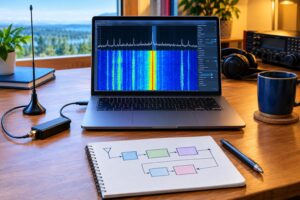
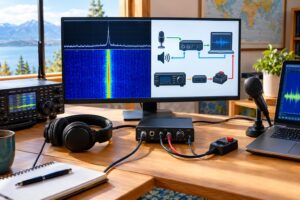
SONATE-2 APRS is a VHF packet exercise. You do not need a large satellite station, but you do need clean audio, accurate timing, and a way to aim or orient your antenna during a low-earth-orbit pass.
A practical station can be built from:
- A 2-meter FM transceiver capable of operating on the published SONATE-2 APRS frequency. Always verify the current frequency from the satellite operator or a trusted satellite listing before transmitting.
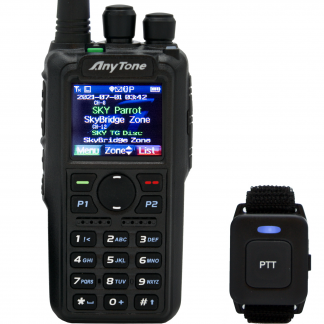
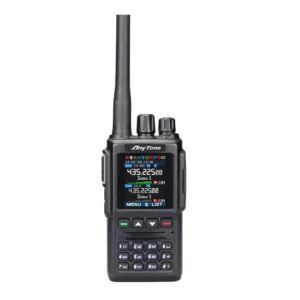
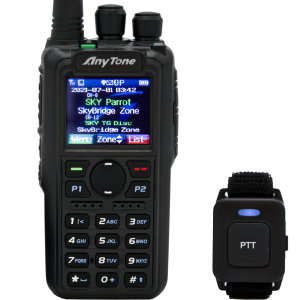
- 1200-baud packet capability, either through a hardware TNC, an APRS-capable radio, or soundmodem software such as Dire Wolf feeding an APRS client.
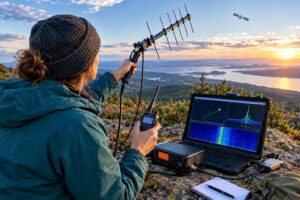
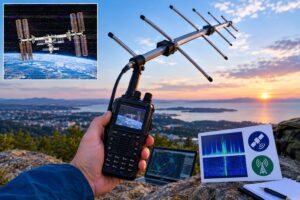
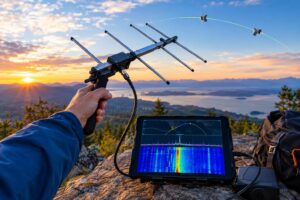
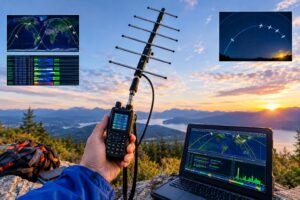
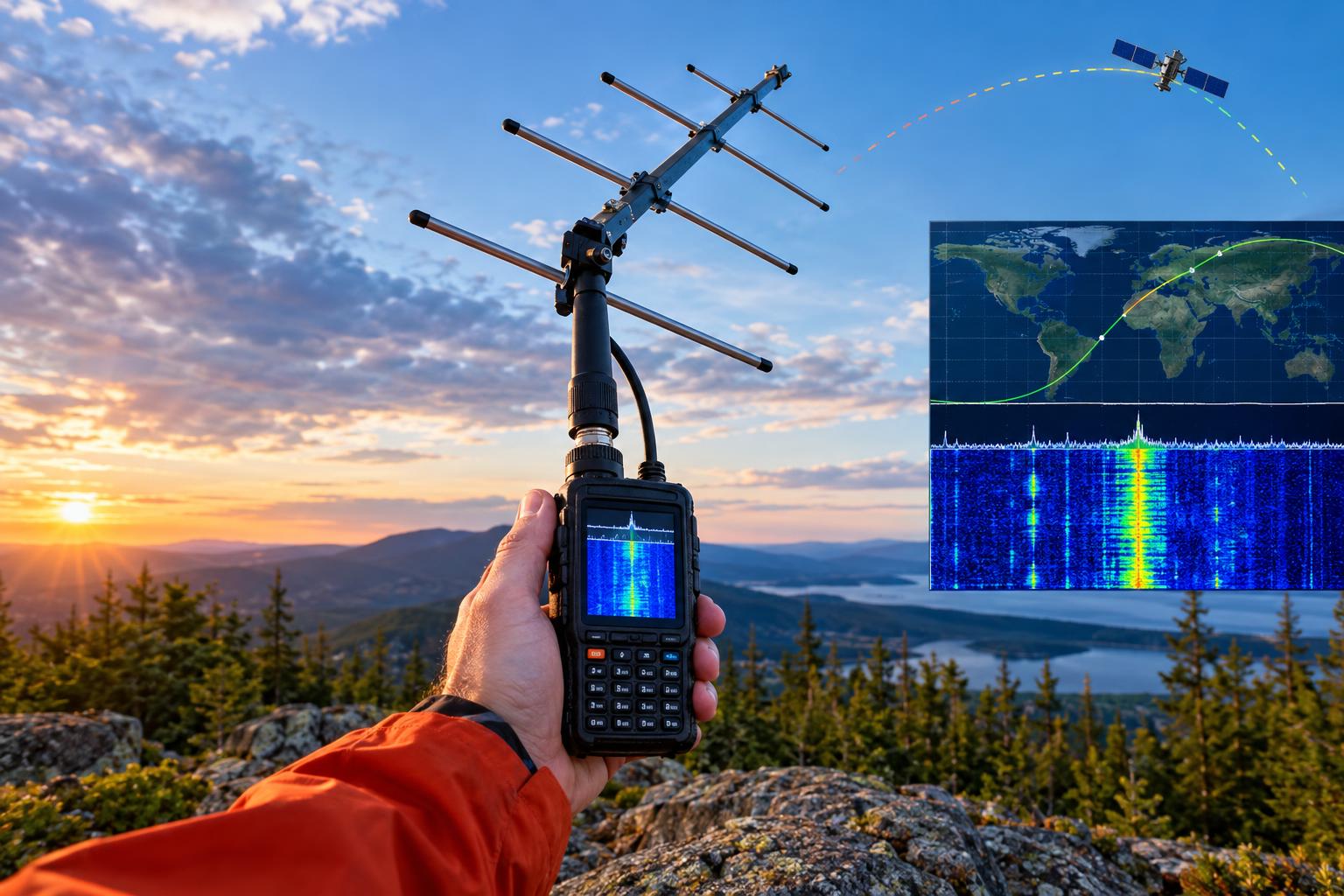
- A directional VHF antenna, such as a handheld Yagi or log-periodic, or a good omnidirectional antenna with enough sky view. A directional antenna usually gives you a better link margin and helps reduce local interference.
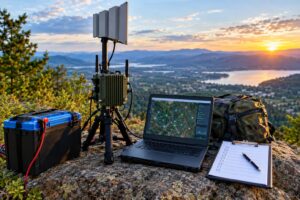
- Pass-prediction software using current orbital elements, so you know acquisition of signal, maximum elevation, and loss of signal times.
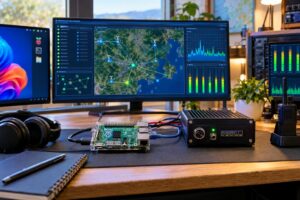
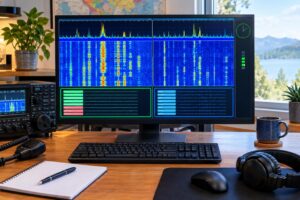
- A receive check path, either your own receiver and decoder or a live packet display such as SpaceAPRS after the pass.
Full-duplex receive while transmitting is helpful because it lets you know whether your packet actually came back through the satellite. Many handheld stations are not truly full-duplex, so they rely on post-pass web checks or a second receiver. That is acceptable, but it makes disciplined timing even more important.
Use the Right APRS Path
The path is where many first attempts fail. For SONATE-2, watch the live packet stream and current operator guidance for the actual digipeater callsign and alias in use. Recent SpaceAPRS packet displays for this satellite show DP0SNX activity, and successful packets should show the SONATE-2 digipeater in the packet path after being repeated.
A practical starting point is:
- Your call sign: your licensed amateur call sign, with an SSID if you use one, such as N0CALL-7.
- Destination: a normal APRS destination such as APRS, or the destination format required by your APRS software.
- Path: use the SONATE-2 digipeater path shown by current guidance and live packets, commonly represented in live packet displays by DP0SNX when the satellite repeats traffic.
- Do not use terrestrial paths: avoid WIDE1-1, WIDE2-1, RELAY, or local fill-in digipeater paths for a satellite pass.
In plain terms, you want one satellite repeat, not a terrestrial APRS flood. A terrestrial path may be normal on 144.39 MHz APRS in North America, but it is not appropriate for a shared satellite pass. Keep the path short and specific.
Live Packet Checks Before You Transmit
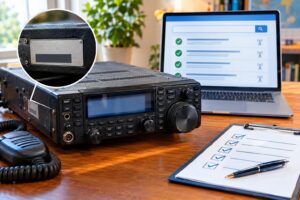
Before pressing PTT, do a quick live-status check. This prevents two common mistakes: calling through an inactive satellite and using stale configuration details from an old forum post or saved radio memory.
Use this pre-pass check:
- Check AMSAT’s active digipeater list. If SONATE-2 is not shown as active, investigate further before transmitting.
- Check the official SONATE-2 amateur-radio page. Confirm the published mode, frequency information, and operating notes.
- Check recent SpaceAPRS packets. Look for recent DP0SNX-related packets. A current packet stream is a strong sign that stations are successfully accessing the digipeater.
- Check SatNOGS for satellite identity and transmitter data. This is useful for confirming that your tracking software and object number are aligned.
On SpaceAPRS, the important details are not just that packets exist, but how they appear. Look for your intended satellite path in the packet header, the time of reception, and whether several stations are already active. If the most recent successful traffic is old or sparse, treat the pass as experimental rather than routine.
A One-Pass VHF Workflow
The best way to work SONATE-2 APRS is to treat each pass as a short operating window with a plan. The following workflow assumes a single operator using a handheld directional antenna, a VHF FM radio, and a 1200-baud packet source.
Ten Minutes Before AOS
- Open your pass-prediction program and confirm AOS, maximum elevation, azimuth track, and LOS.
- Set the radio to the current published SONATE-2 APRS frequency and FM mode.
- Confirm your TNC or soundmodem is producing clean 1200-baud AFSK audio without overdriving the transmitter.
- Load one short APRS position packet or one concise message. Do not queue a long string of beacons.
- Set your path to the current SONATE-2 digipeater path, not a terrestrial WIDE path.
At Acquisition of Signal
Listen first. If your station can decode received packets, watch for other traffic. Early in the pass, the satellite may be low on the horizon, and your signal may be blocked by trees, houses, terrain, or your own body if you are using a handheld antenna.
Do not immediately transmit repeated packets at AOS. Wait until the satellite is high enough to give you a reasonable path, especially if your antenna is modest. For many stations, the best chance is around the middle of the pass, not at the horizon.
Near Maximum Elevation
- Aim the antenna carefully and account for polarization. If the signal fades, rotate the antenna rather than increasing packet rate.
- Transmit one packet.
- If you can hear your own digipeated packet, stop and log the success.
- If you cannot confirm it, wait. Do not fire repeated packets every few seconds.
- If the pass is quiet and geometry is still favorable, make one additional attempt after a reasonable pause.
With LEO satellites, Doppler shift exists even on VHF. For 1200-baud FM packet on 2 meters, many stations succeed without constant retuning, but marginal stations may benefit from small tuning adjustments during the pass if their radio and operating style allow it. If you do adjust, avoid creating more trouble than you solve; clean decoding matters more than chasing every small change.
After Loss of Signal
- Stop transmitting immediately after LOS.
- Check your local decoder log.
- Check SpaceAPRS for your call sign and the SONATE-2 packet list.
- Record the pass time, maximum elevation, antenna used, path used, and whether the packet was confirmed.
Post-pass notes are valuable because satellite APRS success is often about small improvements: cleaner audio, better antenna orientation, fewer obstructions, better timing, and less aggressive beaconing.
Packet Content: Keep It Short and Useful
Satellite APRS is a shared channel. Your packet should identify you and communicate something useful without occupying more airtime than necessary.
Good packet choices include:
- A valid position report with grid square or location comment.
- A brief status such as “EM12 via SONATE-2” or “CQ SAT APRS EM12.”
- A short APRS message to a specific station, if you know that station is active and monitoring.
Avoid long comments, repeated automated beacons, telemetry-like experiments not intended for the digipeater, and any content that would be questionable under amateur rules. APRS by satellite is still amateur radio: identify properly, use permitted emissions and frequencies, and follow your licensing privileges.
Troubleshooting SONATE-2 APRS
You Do Not See Any Packets
Confirm the satellite is active, the pass prediction is correct, and the frequency is current. Make sure your tracking app is using the right object for SONATE-2. SatNOGS lists SONATE-2 as NORAD 59112, which is useful when checking that your software is not tracking the wrong satellite.
You Hear Packet Bursts but Decode Nothing
Reduce receive audio distortion, turn off aggressive audio processing, and check that your software is set for 1200-baud AFSK packet. If using a handheld radio speaker near a computer microphone, switch to a proper audio cable if possible. Packet decoders need clean levels more than loud levels.
Your Packets Are Not Repeated
Check the path first. Then check transmit audio. Overdriven AFSK is a common problem; the radio may sound loud but decode poorly. Also review antenna pointing, pass elevation, local obstructions, and whether you transmitted too early or too late in the pass.
Your Packet Appears Locally but Not Online
That can happen if no internet gateway heard the downlink, if the gateway path was blocked, or if the web display has not updated. A missing web hit is not absolute proof of failure. Conversely, a web hit is useful confirmation that at least one gateway copied the digipeated packet.
Operating Etiquette and Regulatory Cautions
Use the minimum practical number of transmissions. A single successful packet is enough. Satellite APRS passes are short, and many operators may be trying during the same few minutes. Do not run unattended high-rate beaconing through a satellite digipeater.
US operators should operate within FCC amateur rules, use their assigned call sign, avoid prohibited content, and comply with RF exposure requirements. Operators outside the United States should follow their national regulator’s rules. Satellite capability does not override licensing limits, band allocations, or local restrictions.
For physical safety, keep handheld directional antennas away from overhead power lines, use caution on rooftops or hillsides, and manage RF exposure when using higher power or antennas close to the body. Outdoor satellite operating often happens while looking upward; stay aware of traffic, footing, weather, and nearby people.
FAQs
Is SONATE-2 APRS the same as ISS APRS?
No. The operating concept is similar—VHF 1200-baud APRS through a spaceborne digipeater—but the satellite, callsign/path, activity status, and pass schedule are different. Do not assume ISS settings automatically apply.
Can I use an ordinary APRS handheld?
Possibly, if it supports the needed frequency, 1200-baud packet behavior, and manual path configuration. Many APRS radios are optimized for terrestrial APRS, so verify that you can set a satellite-appropriate path and avoid terrestrial WIDE paths.
How many packets should I send in one pass?
Start with one well-timed packet near a favorable part of the pass. If you do not confirm success and the channel is not busy, one additional attempt may be reasonable. Continuous beaconing is poor practice.
Do I need a high-gain antenna?
Not always, but a handheld directional antenna often improves your odds. A modest station with clean audio, correct path, and good timing can outperform a louder but poorly configured station.
Key Takeaways
- Confirm SONATE-2 APRS activity from current sources before transmitting.
- Use the current SONATE-2 digipeater path shown by official guidance and live DP0SNX packet evidence.
- Avoid terrestrial APRS paths such as WIDE1-1 and WIDE2-1 for satellite operation.
- Send short, useful packets and limit attempts during each pass.
- Use live packet checks after the pass to verify success and improve your next attempt.
SONATE-2 APRS rewards preparation more than power. If your frequency, path, audio level, antenna pointing, and timing are right, one clean packet during a good pass can be enough. Check the live data, keep the channel courteous, and treat each pass as a short, shared VHF operating opportunity.